This is default featured slide 1 title

Go to Blogger edit html and find these sentences.Now replace these sentences with your own descriptions.

This is default featured slide 2 title

Go to Blogger edit html and find these sentences.Now replace these sentences with your own descriptions.

This is default featured slide 3 title

Go to Blogger edit html and find these sentences.Now replace these sentences with your own descriptions.

This is default featured slide 4 title

Go to Blogger edit html and find these sentences.Now replace these sentences with your own descriptions.

This is default featured slide 5 title

Go to Blogger edit html and find these sentences.Now replace these sentences with your own descriptions.

Monday, April 30, 2012

5 Complaints About the 3DS (And Why They're Wrong)

Nintendo's having a rough time of it right now, that's for sure. They've posted their highest losses ever, the Wii is weakening, and while the 3DS is selling well it's still not making money for them. It's doom and gloom time!

Well, it's settled. Let's all write off Nintendo now and forever more. After all, the 3DS is garbage because a few people on the internet don't like 3D, the Wii has always been for kids and people who don't know anything a bout videogames, and the Wii U isn't going to be any good because it's underpowered and gimmicky.

We've spent a long time on this blog debunking Nintendo-related predictions, and most of the time we've been right. There's a reason we're called "Downwards Compatible" here: Because we take a long view of things rather than making blanket predictions based on quickly-shifting market trends.

So to that end, we're going to take each of the systems and debunk the main complaints that most comment sections and analysts have about them. Today, we're debunking the doom-and-gloom predictions for the 3DS. Here are the misconceptions about the 3DS in a nutshell:

"No one likes 3D, so it's therefore doomed to fail. It's underpowered with bad battery life, and tablets and smartphones have better games now."

There's only one thing in this litany of complaints that's remotely true: The poor battery life. Six hours for a handheld is kind of crappy. However, those six hours assume that you're playing in 3D with full brightness. Turn down the 3D and your battery life improves. QED.
"3D is a gimmick. It gives people headaches so no one wants the 3DS."
I've been playing videogames for a really long time, almost thirty years. My one complaint about the transition from 2D to 3D is the inability to maneuver in 3D space with any level of exactitude. Jumping in 3D is a chore, because you can never quite see where you're going to end up. All it took was one game to convince me that 3D was going to resurrect the platformer: Rayman 3D. After that, I had no doubt that the 3DS was going to be a big deal.

I cannot tell you how big of a deal this is for platformers and action-adventure games. Being able to clearly see depth without any artificial indicators is a tremendous accomplishment. It's not a gimmick, it's a huge step forward.

The headaches aren't actually a big deal, either. As long as you hold the 3DS steady, seeing the 3D isn't difficult. That's not that hard to do, since I imagine most people aren't shaking their arms like a Quaker while they're playing their 3DS. The only time it may become a problem is in the car, on a bus or an airplane. In that case, turning down the 3D solves the issue.

The whole "3D causes headaches" rumor came from the poor implementation of 3D back in the 1950's. 3D movies in those days demanded perfect synchronization of the films, and if it was off by a microsecond, it created headaches and nausea. Since 3D was adopted by B-movie schlocksters who only cared about the money, they didn't bother getting it right, just getting the money.

Today, 3D is much better, but bad 3D still causes problems. If a 3D movie isn't done right, it can still creates headaches and nausea as your brain can't handle it. That's why it's a good thing that the 3D that the 3DS uses is good 3D that doesn't cause headaches unless you're doing it wrong.
"But you're in the minority on that opinion!"
Nintendo has sold more 3DS units at this point in the system's life cycle than they sold DS units at the same point. Clearly, I'm not alone on viewing the 3D in a positive light.

The only reason it appears that Nintendo is struggling with the 3DS is because of the steep price drop, which ate into their profits. It was, admittedly, a bad decision to release the system so expensively when the tech wasn't quite there yet, but Nintendo really had no other choice at the time.

Was Nintendo going to sit on the 3DS until manufacturing costs dropped to the point where they could sell the system at a profit for $169? That would mean that Nintendo would have to wait until about 2013 to launch the successor to the DS unless they wanted to make a DS2 in the interim, which would muddy the waters further for DS owners. Besides, the 3DS was clearly the right way to go, since, once again, it's opened up a whole new dimension (pun not intended) in gaming.

Besides, what was the real flashpoint for the sales of the DS? Many systems sold right after the launch of New Super Mario Bros. Personally speaking, it's what convinced me to get a DS. Combined with the Brain Age series of games, it sent DS sales into the ionosphere.

Well, Nintendo is launching New Super Mario Bros. 2 and a new Brain Age game, and it's already launched Super Mario 3D Land and Mario Kart 7. I think they'll be OK.
"But the 3DS is underpowered compared to the Vita!"
When has the power of any given handheld ever been the defining factor in its success? The Game Gear was technically superior to the Game Boy, and it got trounced. The PSP was technically superior to the DS in every way, yet the DS buried it. Graphics have never been important in a handheld, and they've actually been more of a detriment than anything else.

In a console system, you can put more powerful graphics into a system with the only limiting factor being the system's final manufacturing cost. With a handheld, you have to take into account the final manufacturing cost as well as the battery life. The more powerful the system, the less the battery life will be. Striking that balance is key.

Nintendo has historically known how to strike that balance. For the 3DS, they made a slight miscalculation with the manufacturing cost. Sony made a major miscalculation, making the Vita a tremendous piece of hardware with great graphics, absolutely no battery life and too high of a manufacturing cost.

So in this case, the 3DS' relative power as compared to the Vita is actually a benefit rather than a drawback to its long-term success.
"Tablets and smartphones are eating up the 3DS' market!"
When presenting this argument, analysts will point to the many millions of iPhones, iPads and Android devices being sold and compare it to the relatively small amount of 3DS units sold. It certainly looks like an insurmountable number. However, we need to stop and think about a few things before anointing smartphones and tablets as the new handhelds.

1) Gaming on smartphones and tablets is not that impressive by design.

Most of the games revolve around simple controls: Tap, swipe or press this at the appropriate time. When they try and take a complex game like Grand Theft Auto III and squeeze it into a tablet, it's a disaster. It can't be done. Even one of the most technically adept games for iOS, Infinity Blade, is a series of swipes, nothing more.

That's because you can't do much more than that on a tablet. At best, you have to use controls that use two fingers, and at worst, you have to adapt your control scheme to one finger. Sure, the tablet manufacturer may be able to include a gamepad, but now you're reducing the portability of the unit and putting it right back at square one.

That doesn't mean that there's still not a lot of people who crave the type of simple gaming that tablets and smartphones. But were those people who crave this type of gaming dropping upwards of $140 for the DS and $30 for each game? Not really. They were the ones who were playing hours of Solitaire and Freecell on their computers or who fell in love with SkiFree and Microsoft Pinball. And what happened to those people anyway?

2) The PC market is dwindling.

People need computers, but they don't want to be tied to their homes anymore. Some are removing their old Windows XP boxes and replacing them with other devices that do email, Facebook, and Youtube. What are they replacing them with?

Smartphones and tablets.

Think of this as the XBox-to-PC migration in the early-2000s. Multiplayer gaming was always the domain of PC games, and when Live launched on the XBox, it cannibalized the PC audience and led to huge growth in XBox gaming, putting PC gaming on the ropes until a viable multiplayer solution arrived in the form of Steam. The audience never went away, it just migrated and moved around a bit.

That's what's happening with the PC market. It's not going away, just shifting. All you have to do is look at the layout of Best Buy or Walmart's computer section, and you'll see the seismic shift right there. PCs are diminishing. Tablets are emerging. With that, the way people buy applications is changing, and 99-cent apps with simple system requirements are easier to buy than $50 boxes with byzantine system requirements.
"Yeah, but I only can carry one gaming device in my pocket, and it's going to be my phone, not a 3DS!"
Oh! Well, that changes everything. I mean, when the DS was popular, that means you didn't carry a cell phone in your pocket then?

No?

Well, then, when you were young, you must have shoved a Game Boy in your pocket, even though the Game Boy was one inch thick, three inches wide and six inches long, right?

No? Well, when did this become a problem then?

The fact of the matter is that most people aren't carrying around multiple devices with them, and they never have. If they've wanted to bring a gaming machine with them, they find a way. This is one of the stupidest reasons to believe that the 3DS will fail, and it's been borne out by the fact that the 3DS' sales have improved over the DS' sales at the same time in its lifespan.

Next article: Why the naysayers are wrong about the Wii... almost.

Tuesday, April 17, 2012

Football and Sample Size

Football is starting to grate on my nerves for a few reasons. The ongoing concussion problems and the way it destroys player's bodies is one of them, but another has to do with one of the fundamentals of football itself: Sample size.

In statistical studies, results can be skewed by selecting a sample size that's too small. Let's use Skittles as an example.
In a typical bag of Skittles, there are five flavors: Strawberry, orange, lemon, lime and grape. They are in equal proportion to each other when they're made.

If I grab five Skittles at random, will I have five Skittles each of a different color? Maybe not. I might have two grape, one strawberry, one lime and one lemon. I might have three orange, one grape and one lemon. I might have four lime and one strawberry.

In this case, bad statistical analysis would be to take that miniscule sample size and conclude that the entire batch of Skittles is skewed in that direction. It would be to say, "I only have four lime and one strawberry in this group of five. That means that 80% of all Skittles are lime, 20% are strawberry, and there are no other flavors in this bag."
In football, there are only 16 games played during the year. Is that enough time to determine which are the best teams? How much statistical variance is there that we're not seeing?

We can't really figure that out using football itself. From year to year, the teams change so much that trying to extrapolate long-term data using several seasons worth of games would be absolutely ridiculous and pointless. However, we could try figuring this out using another sport: Baseball.

Every Major League Baseball team plays 162 games per year, which means that statistical anomalies are shaken out by the end of the year. A team that has a strong start with weak personnel will fade down the stretch, and a team that has a weak start but a strong team will come on toward the end.

But what happens when we shorten the season to 16 games, like football has?

First, click here to see 2011's final standings. We remember how the season shook out: The Cardinals and the Rangers met in the postseason and the Cardinals won. However, if we shorten the season to just 16 games, the same as football does, what sort of records do we have?

Since teams play at different times, we rolled back the clock to April 18th, 2011 to see what each team's record was, then adjusted the date to make sure we got the proper amount of games for each team. If the date was adjusted, we noted the adjusted date next to the team name. We are not adjusting the standings by division tiebreakers, just by percentage.

American League

EAST

NY Yankees (4/20) 10-6 .625
Toronto 7-9 .438
Tampa Bay 7-9 .438
Baltimore (4/19) 7-9 .438
Boston (4/19) 5-11 .313

CENTRAL

Cleveland 12-4 .750
Kansas City 10-6 .625
Detroit (4/17) 7-9 .438
Chicago Sox 7-9 .438
Minnesota 6-10 .375

WEST
Texas 11-5 .688
LA Angels 10-6 .625
Oakland 8-8 .500
Seattle (4/17) 5-11 .313
National League
EAST
Philadelphia (4/19) 10-6 .625
Florida (4/20) 10-6 .625
Washington (4/20)* 8-8 .533
Atlanta (4/17) 7-9 .438
NY Mets 5-11 .313

CENTRAL
Cincinnati 9-7 .563
Milwaukee 8-8 .500
Chicago Cubs 8-8 .500
Pittsburgh 8-8 .500
St. Louis 8-8 .500
Houston 5-11 .313

WEST
Colorado 12-4 .750
San Francisco 9-7 .563
Arizona 8-8 .500
LA Dodgers 7-9 .438
San Diego 7-9 .438
* Doubleheader played on 4/20.

According to the 16-game standings, four teams would be tied for the worst record in the league: Boston, Seattle, the Mets and Houston. The actual lowest records, in descending order, were Baltimore, Seattle, Minnesota and Houston.

According to the 16-game standings, there would be three teams with the highest records in the league: Cleveland, Colorado and Texas with five other teams tied at a 10-6 record (Yankees, Kansas City, Anaheim, Philadelpha and Florida). The actual top four teams with the highest records, in descending order, were Philadelphia, the Yankees, Texas and Milwaukee.

By using the 16-game schedule, your division champions in the AL would be the Yankees, Cleveland and Texas with the Royals and Angels battling it out for the wild card. The NL would be Philadelpha, Cincinnati and Colorado with Florida getting the Wild Card.

The real division champions? The Yankees, Detroit and Texas with Tampa getting the wild card in the AL, and Philadelphia, Milwaukee and Arizona with St. Louis in the wild card in the NL.

So, is the 2011 16-game schedule way, way off? There is quite a bit of variance. While a few of the really good teams would still be good under this drastically shorted schedule, over half of the true playoff teams would have been excluded under the 16-game schedule.

How significant is the variance? On average, in 2011, a 16-game schedule would have produced a variance of 93.56 percentage points. That's an entire win and a half in football terms. That may not sound like much, but one or two wins would have changed the entire playoff picture. The eventual Super Bowl winners, the Giants, may have missed the playoffs altogether. The Broncos may not have made the playoffs, the Titans may have, the Cowboys, Eagles, Bears or Cardinals may have made it while the Falcons and Lions may not have, and so on.

But we don't want to make the same statistical mistake by cherry picking one season, and calling this a wrap. Let's go to the 2010 MLB season and do the same thing. The true final standings are right here, and here are the 16-game standings (Taken from April 23, 2010 unless otherwise noted):

American League

EAST
Tampa Bay (4/22) 12-4 .750
NY Yankees 11-5 .688
Toronto (4/22) 9-7 .563
Boston (4/22) 6-10 .375
Baltimore (4/22) 2-14 .125

CENTRAL
Minnesota (4/22) 11-5 .688
Detroit (4/22) 9-7 .529
Cleveland 7-9 .438
Kansas City 6-10 .375
Chicago Sox (4/22) 5-11 .313

WEST
Oakland (4/21) 9-7 .563
Seattle (4/22) 9-7 .563
LA Angels (4/21) 8-8 .500
Texas 7-9 .438
National League
EAST
Philadelphia 10-6 .625
Florida 9-7 .563
Washington (4/22) 8-8 .500
Atlanta 8-8 .500
NY Mets (4/22) 7-9 .438

CENTRAL
St. Louis 10-6 .625
Milwaukee 8-8 .500
Pittsburgh 7-9 .438
Chicago Cubs (4/22) 6-10 .438
Cincinnati (4/22) 7-9 .438
Houston 6-10 .375

WEST
San Diego 10-6 .625
San Francisco 9-7 .563
Colorado 8-8 .500
Arizona 7-9 .438
LA Dodgers 7-9 .438
There's not as much variance in the top teams here. The top four teams in the real schedule are Phildelphia, Tampa Bay, The Yankees, and Minnesota. The top four teams in the 16-game schedule are Tampa Bay, the Yankees, Minnesota and a logjam between three different teams, including Philadelphia.

The bottom teams in the real schedule are Pittsburgh, Seattle, Baltimore and Arizona. In the 16-game schedule, the bottom teams are Baltimore, the White Sox, Houston, and a tie with Kansas City and Boston.

The division champions are slightly different here. The real division champions in the AL were Tampa, Minnesota and Texas with the Yankees getting the wild card. The NL was represented by Philadelpha, San Francisco and Cincinnati, with Atlanta getting the wild card.

The 16-game schedule has a minimal effect on the AL, just changing out Texas for Oakland. Just like 2011, though, the effect is more pronounced in the NL. The NL would have been represented by Philly, St. Louis, San Diego, and the wild card going to either Florida or San Francisco.

So, what's the big deal? The results were mostly the same with just a few quirks. Doesn't sound like much, but what's the variance? Try 81.73 percentage points per team, which equates to one win again.

What about 2009? Here are the final standings, and here's the 16-game schedule.

American League

EAST
Toronto 11-5 .688
Boston 10-6 .625
NY Yankees 9-7 .563
Baltimore 8-8 .500
Tampa Bay 8-8 .500

CENTRAL
Kansas City 9-7 .563
Chicago Sox 8-8 .500
Detroit 8-8 .500
Minnesota 7-9 .438
Cleveland 6-10 .375

WEST
Seattle 10-6 .625
Texas 7-9 .438
LA Angels 6-10 .375
Oakland 6-10 .375
National League
EAST
Florida 11-5 .688
Atlanta 8-8 .500
Philadelphia 8-8 .500
NY Mets 7-9 .438
Washington 3-13 .188

CENTRAL
St. Louis 11-5 .688
Pittsburgh 9-7 .563
Cincinnati 9-7 .563
Chicago Cubs 8-8    .500
Milwaukee 7-9 .438
Houston 6-10 .375

WEST
LA Dodgers 11-5 .688
San Diego 10-6 .625
San Francisco 8-8 .467
Arizona 6-10 .375
Colorado 5-11 .313
What’s the variance? 98.53 percentage points. That’s a win, once again.

Let's try 2008. Here's the 16-game schedule, and compare this with the real standings.

American League

EAST
Boston 9-7 .563
Baltimore 9-7 .563
NY Yankees 9-7 .563
Toronto 8-8 .500
Tampa Bay 7-9 .438

CENTRAL
Chicago Sox 10-6 .625
Kansas City 9-7 .563
Minnesota 7-9 .438
Cleveland 6-10 .375
Detroit 5-11 .313

WEST
LA Angels 9-7 .563
Oakland 9-7 .563
Seattle 8-8 .500
Texas 7-9 .438
National League
EAST
NY Mets 10-6 .625
Florida 9-7 .563
Philadelphia 8-8 .500
Atlanta 7-9 .438
Washington 4-12 .250

CENTRAL
St. Louis 11-5 .688
Milwaukee 10-6 .625
Chicago Cubs 10-6 .625
Pittsburgh 7-9 .438
Cincinnati 7-9 .438
Houston 6-10 .375

WEST
Arizona 12-4 .750
San Diego 8-8 .500
Colorado 8-8 .467
LA Dodgers 7-9 .438
San Francisco 6-10 .375
The variance here is 83.9 percentage points. Again, a full win.

We'll stop here, because I think we get the point: Every year, because of football's short schedule, there's a possibility that a team either has one MORE or one LESS win than they deserve.

So why does all of this matter? Football isn't the same as baseball after all, and who cares if your team has one more win or one more loss?

Well, if you're having a historically great season, it might not matter. If your team goes 15-1 or 14-2, that doesn't change the fact that it was a great season. If your team is historically bad, it doesn't really matter. What's the difference between 4-12 or 3-13?

However, it does matter if you're a fan of any number of teams that go 7-9, 8-8, 9-7 or 10-6 during the season. A little bit of good luck, and your team is in the playoffs with a punter's chance at a Super Bowl. A little bit of bad luck and your team misses the playoffs and maybe your coach who really wasn't that bad gets fired.

Maybe your team is better than the record shows. Maybe they just need some time to gel and work together, but over the span of just 16 games, they don't have the opportunity.

"So are you suggesting that they lengthen the season?" Absolutely not. How can you, when you have athletes whose bodies are destroyed, like Jim McMahon:

McMahon now says his brain doesn’t work well.

“Short term memory is not good,” McMahon said. “I won’t remember a hell of a lot about this interview in 10 minutes.”
Take Kyle Turley, who said:
You start on your own five-yard line, and drive all the way down the field—fifteen, eighteen plays in a row sometimes. Every play: collision, collision, collision. By the time you get to the other end of the field, you're seeing spots. You feel like you are going to black out. Literally, these white explosions—boom, boom, boom—lights getting dimmer and brighter, dimmer and brighter.
What about poor Dave Duerson, who shot himself in the chest so he could have his brain examined? No, you can't lengthen the season. That's the nature of football.

Therein lies the problem. You can't get the good teams to shake out statistically when the way to do is to lengthen the season, which you can't do for player safety, and if the best teams aren't in the playoffs, then what's the point?

You may argue, “But the best team doesn’t win the Super Bowl every year! I mean, some of these years, the wild card team won, or the supposed ‘best’ team lost in the first round of the playoffs!” This is true, but once again, we’re dealing with a very small sample size. Even in baseball, during a seven-game series, almost every team has a chance versus any other team.

This study is not concerned with who wins in the playoffs, because that's prone to variance. When a team gets to the playoffs, anything can happen, and countless pro football teams haven't been able to get to the playoffs precisely because there's an underlying problem with the game itself that can't be fixed under any circumstances.

Monday, March 12, 2012

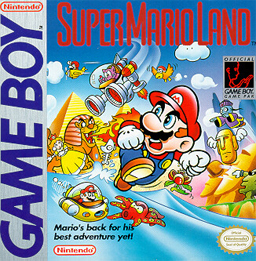
Review: Super Mario Land


Developer: Nintendo
Publisher: Nintendo

Super Mario Land is a weird, weird game. Let's run down a list of reasons why.

  • The sprites are super-tiny.
  • Mario is in a place called Sarasaland.
  • Bowser isn't in the game. In his place is an alien named Tatanga.
  • You're rescuing Daisy, not Princess Peach.
  • There is no Mario music whatsoever.
  • You don't shoot fireballs, you shoot superballs that collect coins for you.
  • Some levels turn into a side-scrolling shooter where Mario uses a submarine or airplane.
  • There are enemies that look somewhat like Mario enemies, but all of them are just slightly... off, like the "Koopa Troopas" that explode after you step on them.
  • There are enemies that look like moai statues with arms that run really fast.
  • Just when the game starts getting interesting, it ends.
All of this combines to make a game that's kind of like Mario, but not quite. If you didn't see Mario in the title or see Mario's tiny, tiny sprite, you would assume it was some sort of Mario knockoff. Nintendo agrees, because neither Sarasaland nor Tatanga have made further appearances in anything Nintendo made.

On the Virtual Console, Super Mario Land is a trifle. It's not as deep as any of the other Mario games and really brings nothing to the table. It's an OK way to kill an hour or two, but really doesn't deserve to be in the same breath as some of the other Mario Land games.

Final Grade: D+

Monday, February 27, 2012

"Nintendo Will Not Return To Profitability"

So Michael Pachter has this to say about Nintendo:
They should have, and because they didn't, the decline in Wii and DS hardware and software sales drove them into generating LOSSES. For those of you who aren't financial analysts, losses mean that the company is worth less than it was before. Nintendo stock has dropped by over 80% in the last few years, and the market has appreciated over the same period. I'm paid to advise investors, and none have made a profit owning Nintendo stock. I don't think that many will make a profit over the next few years, because I don't think Nintendo's strategy will return them to profitability.
I am not a financial analyst, and I'm not going to argue with Pachter over whether or not he's right. He has access to a lot more information than I do, although he's been saying that Nintendo's going to release a Wii HD repeatedly and hasn't been right so far.

I'm also not going to argue the point that the 3DS is doing great now after a rocky start, and that analysts' repeated calls for Nintendo to join up with smartphones is a complete waste of time, ink and breath. I'm not going to argue that the vision of a company like, say, Apple was run almost entirely off of the ideas of one man as opposed to a corporate culture like Nintendo.

I'm also not going to argue that while Nintendo is worth less now than they were two years ago, that was when Nintendo was at its absolute, once-in-a-lifetime peak, and I'm also not going to bring up the fact that  Nintendo has consistently weathered the tough times far better than other industry darlings and for far longer.

I don't believe I can argue with Pachter, especially since he tosses in this withering bon mot at the end:
If the context above infuriates you, go back to school and pay attention, then read it again ;-)
Since I do not have the time to go back to "school," where, most assuredly, Mr. Pachter learned a great deal about profit, judging from this statement:
I'm paid to advise investors, and none have made a profit owning Nintendo stock.
I understand that he means "in the last two years," or at least I would hope so. If he means what he wrote, that no investors have ever made a profit owning Nintendo stock, then it is quite possible that Mr. Pachter must go back to school.

No, I won't argue any of these points, since I am obviously not capable enough to argue any of them. So instead, I'll just sit back, enjoy my Nintendo products and accept their inevitable decline into obscurity. After all, he's a financial adviser. Surely none of them have ever been wrong.

Wednesday, February 15, 2012

Review: Pushmo

Developer: Intelligent Systems
Publisher: Nintendo

There is a right way and a wrong way to make a downloadable game. The wrong way is Sakura Samurai's way: Cool concept, lackluster execution. The right way? Pushmo. Cool concept, great execution, and a whole lot to do.


Pushmo is like this: They hand you a structure called a Pushmo, and you can pull blocks of the structure forward and backward in order to create steps. You use those steps to get to a predetermined point on the structure in order to rescue someone trapped in the structure. It sounds fairly complicated, but Pushmo does a fantastic job explaining exactly what needs to be done.

There are few things that make Pushmo work. One, most of the puzzles are devious. I found myself staring at puzzles blankly wondering what the heck I needed to do to get to the top. However, none of them are really impossible, just require a little bit of thinking.

Two, the difficulty curve is fantastic. They introduce concepts easily and slide them in alongside things you already know. If you've spent a while on a puzzle and can't figure it out, you can skip on to the next one, which is great.

Three, there are a ton of puzzles, and if you finish them all you can create your own with the Pushmo Studio and then share them with others using QR codes. That means that there's always plenty to do.

I'm impressed by Pushmo. Not only is it deep, but it's cute, the graphics are sharp, the music is fun and not very cloying, and it's a ton of fun. If you have a 3DS, buy Pushmo.

Final Grade: A

Tuesday, February 14, 2012

Review: Sakura Samurai: Art of the Sword

Developer: Nintendo
Publisher: Nintendo

Nintendo is finally making downloadable games for the eShop. It's taken them long enough, but they're finally trying something new, and good for them. It's important to show the other guys how it's done. However, Sakura Samurai: Art of the Sword isn't a good way to do so.
Sakura Samurai isn't like other, more kinetic swordfighting games. It's a game of observation and reflexes: Watch the way your opponents move, dodge their attacks and then counter with one of your own. In that sense, it's a great approximation of how swordfighting really is rather than how it's made out to be in most video games and movies.

The mechanics of Sakura Samurai are beyond reproach. The problem is that there isn't much else to do. In every new level, you'll face off against a few enemies. You kill them and some more appear. That's it. Rinse and repeat in the next level.

I mean, imagine what they could have done with this premise! What about a battle where you need to use the terrain to your advantage! Attacking downhill gives you a bonus! Rocky terrain can cause poor footing, meaning you can't dodge repeatedly or risk falling over! Use rocks and trees to your advantage and back up your opponents against them! Anything else!

On top of that, my love for this game was cut off at the knees because of one particularly annoying level. It's a really long castle where you fight about 20 enemies before arriving at the big baddie, who's twice your size with a giant sword. Threatening! Imposing! The first time you fight the battle, it looks like a total setpiece battle that you'll remember for a long time! However, if you die (and you will die repeatedly), you have to begin at the very beginning of the level, fight all 20 opponents again, then get to the big bad, who might kill you again. Then you have to fight through the level again, get to the big bad, so on and so forth.

I lost about ten times to the boss and almost gave up, but decided to press onward in the off chance that the next series of levels were somehow more entertaining. Nope. Same thing, same repeated series of levels.

I love the mechanics in Sakura Samurai. However, until they use those mechanics in a game that does more than just rehashes them over and over, I can't recommend this game.

Final Grade: D+

Thursday, February 9, 2012

Adventures With Digital Distribution

As of right now, there are only two digital distributors worth dealing with: Good Old Games and Steam. The interesting thing is that both of these distributors are based on one guiding principle: Trust.
For example, Good Old Games lets you download the full files of whatever game you've purchased. There's nothing stopping you from putting that file on your torrent site of choice and letting others enjoy the sweet nectar of your purchase, and yet, you rarely see GOG files ending up on torrent sites.

Why is this? First, the games are so darn cheap that they're almost impulse buys. Second, they make the games easy to buy. Third, and most importantly, they don't treat the customer like a criminal. There's no limit on how many times you can download the game, no crazy online activation schemes to go through. That takes away the moral justification that people (myself included) have for pirating.

It's one thing to steal from the rich and give to the poor, but if the person you're stealing from is the nicest guy in town, it just makes you look like a jerk.

While Steam has to bow to the whims of the game industry's heavy hitters, it's also surprisingly flexible in the way it allows you to install the Steam client on different computers, and it also doesn't place any restrictions on how many times you can download the game. As we've discussed before, Steam succeeds for very good reasons.

Why do I bring this up? I'll tell you: Two bad experiences, one right after the other, with digital distribution. One demonstrates a misunderstanding of what digital distribution is supposed to accomplish, and one demonstrates the problem with the smaller providers as the industry grows and changes.

My first experience came from Batman: Arkham City. I first began playing the game via a pirated copy, since, while I had heard good things, I wasn't sure if it was a game I wanted to plunk down cold, hard cash for. I played it and enjoyed it immensely. When it came on sale at Impulse for $25, I immediately jumped at it to support the developer.

Impulse was previously owned by Stardock, who used the service to send out their own games. They couldn't make a go of the platform, and ended up selling it to Gamestop. Compared to Steam, it's lacking in features. There are no achievements, no community features, nothing. It's a pure delivery platform, nothing more and nothing less.

When I start the pirated copy, it waits on an initial loading screen for about fifteen seconds and then moves on to the actual game. When I start the legit copy that I paid for with cash money, it doesn't start for two minutes. This is because they're using DRM in the background to verify that I really paid for the copy that I paid for.

Bear in mind that this process is completely useless, since it's been bypassed handily in the pirated copy, and you can see where the issue lies. The whole point of digital distribution is to minimize piracy and used game sales, but when you layer DRM on top of the downloaded copy, it's completely destroying the point.

Not only that, but a ridiculous install limit was placed on the downloaded copy of Arkham City. I can only install the game five times before it runs out. If I decide to wipe my computer? That's an install. If I have to uninstall/reinstall the game? That's an install. I'm being penalized for purchasing the game instead of pirating it. The pirates have provided a better customer experience than the companies that are supposed to provide it. That's sick.

My second experience came from Civilization 4. I purchased the game via Direct2Drive a while back, and their system was pretty simple: Download the game, enter the product key and it'll go through a brief online activation. That's all. Since they gave me the capability of storing the files on my computer, it's only fair that I be forced to use a one-time online activation.

I've saved those files on my computer for a few years now, on the off chance that I'll want to reinstall the game. A week ago, I caught the bug again, so I started those setup files. The install went swimmingly, and I opened up Civ 4. It started to run the activation and then stopped with an error saying it couldn't connect to the server.

So why wouldn't it work? I went to Direct2Drive's site and found that it had been purchased by GameFly. I couldn't find any help forthcoming on GameFly's site about why Civ 4 wouldn't connect, but I have a clue. GameFly has a beta client software they would like me to download. I'm assuming that this is their new distribution model for their games, and what I would have to do if I wanted to play Civ 4.


Once again, I went to a torrent site, downloaded a Civ 4 .iso, installed it and was playing shortly after the download finished. No hoops, no muss, no fuss.

Since digital distribution is still in its infancy with only Steam being an established provider, purchasing from any other company can be a crapshoot. Will the company still be in their current form a year later? Two years later? Will any activation methods still work? Of course, the companies don't care because they have your money already.

As we've mentioned, Good Old Games steps around this. If Good Old Games were to go out of business tomorrow, every game that I have purchased through them would still work. Yes, they already have your money, but they still provide you with the followthrough that makes their business work.

And don't even get me started on the one time I tried downloading Age of Empires 3 from the Games for Windows Live client. Ugh.

This is what's driving me crazy. Most digital distribution providers are providing an experience inferior to what the pirates offer, and they're charging us money for the privilege! I've learned my lesson: When it comes to digital distribution, stick with the companies that trust you as the consumer, since most of them don't. Give them your money in appreciation of the great work they do, and maybe some of the other ones will get the hint eventually.